
1.0 INTRODUCTION
Project planning is part of project management, which relates to the use of schedules such as Gantt charts to plan and subsequently report progress within the project environment. Initially, the project scope is defined and the appropriate methods for completing the project are determined. Following this step, the durations for the various tasks necessary to complete the work are listed and grouped into a work breakdown structure.

Project planning is often used to organize different areas of a project, including project plans, workloads and the management of teams and individuals. The logical dependencies between tasks are defined using an activity network diagram that enables identification of the critical path. Project planning is inherently uncertain as it must be done before the project is actually started.
Therefore, the duration of the tasks is often estimated through a weighted average of optimistic, normal, and pessimistic cases. The critical chain method adds “buffers” in the planning to anticipate potential delays in project execution. Float or slack time in the schedule can be calculated using project management software. Then the necessary resources can be estimated and costs for each activity can be allocated to each resource, giving the total project cost.
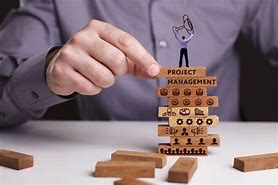
At this stage, the project schedule may be optimized to achieve the appropriate balance between resource usage and project duration to comply with the project objectives. Once established and agreed, the project schedule becomes what is known as the baseline schedule. Progress will be measured against the baseline schedule throughout the life of the project. Analyzing progress compared to the baseline schedule is known as earned value management.
The inputs of the project planning phase 2 include the project charter and the concept proposal. The outputs of the project planning phase include the project requirements, the project schedule, and the project management plan.
Project planning can be done manually, but project management software is often used.

3.0 MAIN CONTENT
3.1 Definition of Project
Project management has evolved because of the need to manage complex public and private sector activities. But before we go into our discussions on project management, we need to understand the subject matter. We also need to understand our operating terminology. Project has been defined in various ways. Some authorities see projects as mere activities while others see them as programmes of action.

Longman Dictionary of Contemporary English defines a project as ―an important and carefully planned piece of work that is intended to build or produce something new, or to deal with a problem. From this simple definition, we can see that a project, apart from being important, should be carefully planned so as to produce something.
Some of the things that a project seeks to produce may be tangible or intangible. A motorcycle is a tangible product but conducting a census is not a tangible product. The following are examples of projects:
a. construction of a 50-bed hospital at Ikeja by the Lagos State government, Nigeria.
b. Dualisation of the Lekki-Epe, Lagos highway by the Lagos Ministry of Works, Federal government of Nigeria.
c. sinking of 10 water boreholes at Ikorodu town by the local government council.
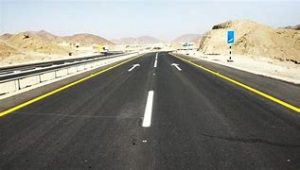
From whatever angle we see these projects, some of their features are that they will require the commitment and deployment of scare resources. Also, the products will not manage themselves. They will be managed.
3.2 Meaning of Project Management
If we define a project as an important piece of work, project management is the planning, organising, directing and controlling of resources for a relatively short-term objective that has been earlier established to complete specific goals. For example, the construction of a 50-bed hospital at Ikeja by the Lagos State government will require a
lot of resources: financial, material and labour.

There will be need for procurement of land. There will also be need for architects to design the hospital. There will be need for structural engineers, civil and building engineers and electrical engineers. Different types of equipment will be sourced for
e.g. X-ray machines, laboratory equipment, etc. to equip the hospital. There should be a way in which all these resources should be coordinated and managed for effective and time management. In situations like these, project
management comes in handy to provide much needed expertise.

3.3 Purpose of Project Management
From the onset, it will be necessary to stress that many projects are very complex in nature. The complexities may be introduced by the nature of technology required to execute the project. For example, a census project is one of the most difficult and complex projects that public sector managers may face. Also, managing the 2007 election in Nigeria was another complex project.
Most projects such as we have mentioned may require elements of critical risks and uncertainty. For example, how do we predict what will happen next year? Even if we could predict the political future with a measure of certainty, predicting the movement of prices and costs of materials like in Kenya or anywhere else involves a lot of risks and uncertainty.

In all cases therefore, we would say that the purpose of project management is to foresee the future and associated problems and therefore, plan, organise and control key activities so that projects are completed successfully and on time too. If we see project management from that perspective, it follows logically that project management starts even before financial resources are committed and lasts until the completion of the project.
SELF-ASSESSMENT EXERCISE 1
Explain the meaning and purpose of project management.
3.4 Types of Projects
We have discussed the meaning of project management and also the purpose. Let us go further and discuss the various types of projects that we might encounter in our different organisations as managers. Some of the types include:
3.4.1 Tangible Projects
Tangible projects are those projects whose output are tangible and can be seen with the naked eye. They may include the following:

• a civil engineering project
• a hospital building project
• a water borehole project
• an aircraft manufacturing plant
• a milk manufacturing plant
• an urban play ground.
3.4.2 Intangible Projects
Intangible projects are those that require commitment of resources but whose output cannot be seen with the naked eye. In most cases, they are social projects and in some cases they may be political projects. Examples of intangible project in Kenya include the elections and the national census.

SELF-ASSESSMENT EXERCISE 2
Discuss five tangible projects you may find in a new and emerging city.
3.5 Projects Objectives
Projects must have objectives. It is one of the important tasks of project managers to see that the projects they manage meet their objectives. Let us now discuss the objectives of projects.
3.5.1 Completion Time
Most projects, when formulated, have completion times. A normal football match lasts for about 90 minutes. It is the duty of the referee to ensure that the football match is completed within the set time. Most public sector projects even at the time they are awarded or initiated always have a time frame attached to them. For example, in a country like Kenya, the construction of the Nairobi Suswa standard gauge railway may be projected to be completed in 24 months. That is the projected duration of the project. Any contractor who is given the contract for such a job should ensure that the road is completed on time.

Another point to note about completion time of projects is that late completion or delivery of an agreed project will not please the sponsor of a project. Consider, for example, that the Kenyan government- Ministry of transport awards a contract for the construction of the Nairobi Suswa railway to Julius Berger and the road is to be completed in 24 months under the terms of the underlying contract.
If Julius Berger, the contractor, fails to complete the road project in 24 months, the Ministry of Works will not be pleased with it. Besides, time is money and if a contractor fails to operate within a time frame, inflation may set in and delay the project completion or increase the cost.

3.5.2 Performance
All projects have objectives which they set out to achieve. For example, a public hospital project should have the objective of providing safe and affordable healthcare to the community. Also, a private sector fast food project has the objective of manufacturing hamburgers, fish cake, hot dogs, etc. for its customers. This is a performance objective.
Also, apart from the performance objective, most projects have a quality objective. For example, a hospital should have the objective of providing healthcare. This is a performance objective. But the provision of the service should be safe. For example, hospital workers (nurses, doctors, etc.) while treating patients must take adequate care so as not to infect the patients with the HIV through use of unsterilized needle. This is a quality objective.

Most organizations have quality as one of their major objectives. See, for example, what Daimler Benz has done with Mercedes Benz cars. Sony products are reputed for their amazing quality. Finally, another aspect of performance is reliability. A good product should also be reliable especially in the case of medical testing devices like PH meters.
In patient care, an unreliable thermometer may raise a false alarm concerning the health of a patient and lead to wrong diagnosis.
3.5.3 Budget
All projects involve financial outlays. The financial outlays (expenditures) attached to a project are usually controlled by the budget. The budget sets a limit as to the quantity of funds a project can consume. In most organisations, the budget for every project is usually set aside. The reason why a project should be monitored is that
failure to do so in some cases may lead to exhaustion of funds and abandonment of the project in question.
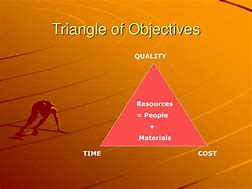
We have seen that projects may have three main objectives, namely: time, performance and budget objectives. A major task facing project managers is how to balance these three objectives. What it means is that at all times the focus of managers must be on the three items. To retain our understanding of project objectives, we will go a step further to look at a simple triangle of objectives.
Fig. 1: The Triangle of Objectives
SELF-ASSESSMENT EXERCISE 3
4.0 CONCLUSION
In this unit, we have discussed the nature and purpose of project management. We looked at the definition of a project and also a working definition of project management. We also looked at types of projects and also project objectives.
5.0 SUMMARY
This unit is a foundation unit in our study of project management. It tries to provide a starting point for our discussions on the key aspects of our study of project management. It discusses the nature of projects and also the purpose of project management. With this background, we will now move ahead with our work.

6.0 TUTOR-MARKED ASSIGNMENT
Discuss the key objectives of project management.
7.0 REFERENCES/FURTHER READING
Belbin, R.M. (1996). Management Teams: Why They Succeed or Fail. Oxford:
Butterworth-Heinemann.
Morris, P.W.G. (1997). The Management of Projects. London: Thomas Telford.

Not a member yet? Register now
Are you a member? Login now