
Usher’s Handbook
Introduction
Usher Responsibilities
Duties of an Usher
Head Usher
Dress Code
Usher’s Conduct
Offering Procedures
Communion Procedures
Introduction
The definition of an usher means door keeper but in truth, our churches greatly depend on diversity and magnitude of the many services ushers provide. Each usher has the opportunity to impact the lives of new and existing people in the church and should be viewed as an extension of the pastor’s hand. In most cases, they provide the first
impressions of church and ministry of the pastor.
Most pastors believe that an usher’s performance can make or break the outcome of the service as well as bring a true reflection of how friendly and loving their church really is. Ushers set the spiritual climate of the service by presenting a joyful attitude, make others feel welcome and comfortable, and make sure that everything is flowing in a proper order so that everyone is free to worship without interruption.

Usher’s Motto (the 5 T’s):
Teachable, Thoughtfulness, Tactfulness, Timeliness, and Teamwork
1. Teachable. Ushers should have the right spirit and heart that easy to serve people and church well. Every usher should be willing to be taught and learn ways to improve. Ushers who are ever-learning can greatly enhance the service.
2. Thoughtfulness. Ushers should be looking for ways to serve and help others. Opening doors, assisting visitors, being courteous, and looking for ways to help others along with their other duties can bring a positive reflection for the church.
3. Tactfulness. Ushers should present themselves in being able to communicate well and have a keen sense of knowing what to say, what to do, and where to direct others as a way to maintain good relations and prevent distractions in the service.
4. Timeliness. Ushers should be on time and also timely in bringing assistance to others. An effective usher does not wait to be asked or wait for others to help but is keenly aware of what is going on in the church and allows the flow of the service to continue without distractions.

5. Teamwork. Ushers should work as a team, each one working together as a whole. Ushers should work uniformly in receiving offerings, communion, bringing order to the service in as many ways as possible.
Usher Responsibilities
1. Faithfully attend church, whether you have ushering responsibilities that day.
2. Arrive at the church 30 minutes prior to the start of the service.
3. Dress should be appropriate, clean, and neat.
4. Work and receive instructions from the Head Usher (if a church has one).
5. Get the bulletins and take them to the assigned positions.
6. Maintain supplies at the Altar, make sure pews have adequate hymnals, Bibles, pencils, and offering envelopes.

7. Welcome arriving congregation with a warm, friendly smile.
8. Be alert for issues that may need your attention.
9. Provide directions to the restrooms, children’s church, nursery, etc.
10.Assist the elderly and handicapped out of their cars and into the church.
11.Be available for offering, special offerings, and other duties as directed by the pastor.
12.Two or more ushers count the offerings and place the offering in the safe.
13.After the offering, at least one usher must remain in the lobby area to offer assistance when needed. They can monitor the hallways for unexpected guests.

14.Be aware of the temperature in the sanctuary.
15.Some churches require an usher to count attendance.
16.Be available around the Alter.
17.After the service has ended, have a designated usher go through the church building to make sure doors and windows are locked and no one else is in the building.
18.Turn out lights, adjust temperature levels, lock all doors, and turn on church alarm.
19.Provide Emergency help when needed in an orderly fashion.
20.In winter months, help to shovel snow and place salt on the walk ways.

Head Usher Responsibilities
1. Receive special instructions from the pastor.
2. Oversee and direct operations of ushers during the assigned time frame. Make sure special instructions from pastor is followed through.
3. Contact usher crewmembers prior to the start of the service to make sure there will be an ample number of ushers available. Make usher substitutions when necessary.
4. Conduct pre-service prayer.
5. Provide teaching and training for all ushers which includes, greeting others, how to handle emergencies, how to assist congregational needs, offering duties, and provide courteous and thoughtful attitude in their role.

6. Maintain open communication with all ushers. 7. Rotate ushers to avoid usher-burnout and allow others to be involved in providing services to the church.
8. Make sure to evaluate the offering procedures to have an air-tight system of removing offerings from the sanctuary to the time it is placed in the church safe.
9. Develop and train ushers how to handle overflow seating situations.
10.Recruit someone to pick up communion cups and communion trays after the communion service is over.
Dress Code
1. All ushers must be well groomed, neat, and dressed appropriate.
2. Attire should include slacks, dress shirt, polo shirts are considered for most services. Sunday morning services usually prefer suits and ties.
3. No T-Shirts or shorts are permitted.
4. Body piercing and tattoos may be permitted, provided it is tasteful, and is acceptable by the head usher or pastor.
5. Women should be tastefully dressed also. No miniskirts, tank tops, low necklines are permitted.
6. Types of cologne and perfume should be considered as some people are allergic to certain fragrances.
7. Fresh breath is important. Breath mints are acceptable. Chewing gum is also acceptable as long it is not annoying to others.
Usher’s Conduct
1. An usher should always display a positive warm smile to everyone who comes into the church or anyone they may assist.
2. An usher must display a servant’s heart, willing to always serve anyone, no matter how big or small the request.
3. An usher must avoid long conversations that could overlook providing a handshake, smile, and greeting to everyone who is in attendance.
4. An usher must never place his/her hands on the opposite sex other than a friendly handshake or helping someone at their request. Ask before touching.
5. An usher’s conduct should be above reproach and should reflect a gentle Godly spirit to all they serve.
6. Only females will place and remove modesty cloths on women around the altar.

Offering Procedures
1. Have enough ushers for each isle of the church.
2. All ushers will proceed together, walking in unison from the back of the building to the front, and will turn and face the congregation.
3. Each usher will bow their head in reverence when prayer is given for the offering.
4. Each usher will go to their section and stand at the end of each row, passing the offering plate down their respective row, rotating every other row, and observing the usher at the other end to make sure the flow of the offering is managed well. There may be times when the offering may be slow due to someone writing a check, the other usher continues to pass the offering place to the next row or slow down enough to allow the other usher to pass their plate to the next row. It is also permissible to continue receiving the offering and come back to the one who has needed more time to complete their offering.
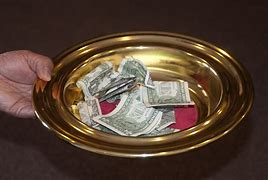
5. Each usher will hand their offering plates to the head usher once they are out of the sanctuary or to the ushers designated to count the offering.
6. Once the offering has been counted, it is customary to have an offering summary form to be completed, signed by the ushers who are counting, and placed in a sealed offering envelope. This is to be placed in the church safe.
7. Some churches require the head usher to place an offering amount on a separate sheet of paper to give to the pastor after service for their information.
8. If there is a second offering, the head usher will need to either lock the first offering in the church safe and recount later, or arrange for an adequate number of ushers to be available to receive the second offering. If the ushers have to leave for the second offering, the designated ushers will go back to count both offerings and follow the previous procedures.

Communion
Churches vary on communion procedures. In most cases, the church will either use regular ushers or elders of the church, who serve as ushers, to take the communion. The format is similar to receiving offerings.
1. All ushers/elders walk slowly from the back of the sanctuary to the front in unison and turn facing the congregation.
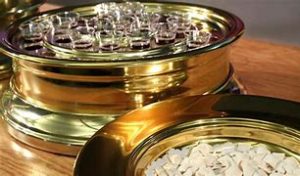
2. Once all ushers/elders are in place, the pastor will ask the ushers to distribute the elements. Each usher will gather a communion tray or plate with two ushers being assigned to each section of pews or chairs to distribute to elements to the members. 3. One usher will be assigned to serve the platform, and another will be assigned to serve other people in the church, such as the sound person, nursery attendants, etc.
4. Once everyone has been served, the ushers bring all plates back to the communion table and face the congregation. In most cases, the pastor will come and serve the ushers with either reaching for his own elements or having the head usher to serve the pastor. (Some pastors prefer ushers to gather their elements after they have served others and return to their seats for the remainder of the communion.)

5. The pastor will read the communion scriptures and usually will ask one of the ushers/elders to pray for a part of the communion.
6. Once the communion is over, ushers will be allowed to go back to their seats with the pastor conducting the rest of the service.
7. After the regular church service has ended, the head usher makes sure that a person picks up the communion cups and vessels.
Not a member yet? Register now
Are you a member? Login now