1.1 Introduction
This unit introduces students to the concept of public policy. It explains what public policy means and its main features. It also examines the different types of public policy and the theories that have tried to explain them. It then gives examples of the types of public policy areas.
That are of importance to countries and how due to globalization, Public Policy is becoming more transnational as the world grapples with shrinking borders and new issues and concerns that are emerging.
2. What is Public Policy?
We begin by examining what Public Policy means. The study of public policy has gained more attention in recent times, but it is important to appreciate that policy making has been in existence since the formation of any kind of community. There has always been a need to develop the basic foundations and laws that will govern the community of people and how their concerns can be addressed, and their lives can be improved. These processes formed the basic foundation of public policy development.
So, whether we are examining a small village, city or nation, policies have always existed in one form or the other all with the overriding goal of improving the lives of the citizenry, the security of the state and ensuring good relations with the wider society.

Prior to the emergence of the nation state, the task of developing policies was the responsibility of the paramount ruler or in some cases a group of elders nominated to provide guidance. As societies evolved and nations states emerged, these responsibilities were primarily carried out by the state through elected officials. It does not matter what system of government is being operated, policies will exist and only differ in the priority areas and the process of their development.
Anyebe (2018:8) defines public policy ‘as the direction that governments lay down in order to take decisions or ‘as a relatively stable, purposive course of action followed by an actor or set of actors in dealing with a problem or a matter of concern’ (Anderson, 1997 cited in Anyebe; 2018:8). However, the whole concept of public policy continues to be examined and this has led to the emergence of several definitions of the concept.

One prominent definition has been that public policy is ‘what government intends to do to achieve certain goals’ (Anyebe; 2018:8). Nevertheless, it has been noted that public policy goes beyond just deciding to do something and must also involve ‘actual resource allocation presented by projects and programmes designed to respond to perceived public problems and challenges requiring government action for their solution.’ (Anyebe; 2018)
It can thus be said that public policy is ‘a system of laws, regulatory measures, courses of action, and funding priorities concerning a given topic promulgated by a governmental entity or its representatives.
Importantly as Osman (2002) notes, public policy making is not merely a technical function of government; rather it is a complex interactive process influenced by the diverse nature of socio-political and other environmental forces. These various forces, such as social, cultural and environmental, form the policy context and results in variations in policies and affect the output and impact.
This brings us to the essence of public policy, which is that it must be goal oriented and that they are instruments to achieve goals. We should note that the statement of a goal does not make it a policy. Every government policy is the aimed at achieving some goal, either aimed at the majority of the population- such as a poverty alleviation
programme or aimed at some specific section of the population -such as a policy aimed at reducing maternal mortality or assisting people living with disabilities.
Whenever governments develop policies, they must find ways of translating these into goals. We began by stating that public policy is simply defined as what government actually decides or chooses to do and this assumes government actions are geared towards improving the lives of their citizens.

This positive inference shows the way in which governments try to deal with the concerns of the citizens and how it aims to better lives lives and this involves actions that cut across different sections of government, including the legal and administrative (Orizu, Chinyere, and Tochukwu. 2012)
It has been argued that the development of policies is not the sole prerogative of government. Citizens also advocate for policy. However, few of such are implemented by government because these are the ones that have an effect on the citizens of a country and only then can they be public policy (Dlakwa; 2008 cited Orizu, Chinyere,
and Tochukwu. 2012)
Importance of Public Policy

Why is public policy important? In every society there are always issues of concern and these need to be tackled and as countries have grown in size, the number of issues has multiplied. Managing health issues such as reducing infant and maternal mortality, improving standards of education, improving national and individual food security
and reducing poverty have all become issues of greater concern around the world.
Governments thus have a responsibility to identify the areas of concern and come up with policies that can address such issues. Public policies usually have a clear purpose and a time frame to achieving their goals. Once a goal is decided the policy is devised in such a method that it determines the course of action needed to achieve that goal.
The concept of public policy gained greater traction after the second world war when the devastation from the war raised many socio-economic issues that required attention and needed to be addressed.
The period was also of great importance to the emerging colonial states because colonialism had, depending on how it was examined, drained many of the colonial states of their resources and the focus had not been on the improvement of the state rather the concern was with maintaining law and order and extracting resources from the colonies to the home country. As greater demand for independence gained momentum, the issues that were of importance to the citizens started getting greater attention and needed to be addressed.
Another period that has seen the emergence of new concerns and issues has occurred as the world has become more globalised and the borders between countries have shrunk and in some cases are fluid. This has resulted in new global policies having to be developed by the community of nations to address these issues. As Cochran and
Malone (2014:2) note:

‘public problems are more complex, interconnected, and global than in the more agrarian society at the turn of the nineteenth century. These policy problems require rigorous analysis along with an understanding of the strategies needed to turn imaginative policy ideas into practical problem solving in making policy choices.’
Some of the issues include the increasing number of migrants from countries such as Libya and Syria, who due to the devastation of the wars are trying to make their way to Europe or the United states. The same is true for many citizens from South America who are also trying to make their way to North America particularly the United states.
International organizations such as the International Office of Migration (IOM), which is a United Nations (UN) body are working with countries to develop policies on how these migrants and refugees should be treated. There is also the issue of women and slave trafficking that has become an issue of concern and the increasing role of the
worldwide web in spreading information where, hate speech and fake news and fraud are becoming more common.
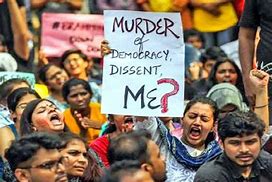
How are nations meant to tackle this? There is the need for a broad international legal framework to be developed to handle this. In developing countries, the examination of public policy has been from a largely developed world perspective. This has resulted in poor policy development and implementation in developing countries and might explain why many of these countries are still tackling socio-economic issues.
Osman (2012) notes that current policies are not reflective of the public policy process in developing countries because they have been developed from studies of industrialized countries.
Features of Public Policy
We can now examine the main features of Public Policymaking. The Public Policy process is seen as being ‘a very intricate process’ that involves several interconnected components that interact on different levels’.
It has been observed that while some of the parts of the process are clear and observable, others are difficult to see and could have unforeseen effects on the expected outcomes of the policies.
Secondly, public policy is seen as being part of a dynamic process because it is a continuous process that occurs within a structure and is said to change with time, and this make it complex. The reason for the complexity relates to the different institutions and actors that affect the way public policy is shaped and how the components can
affect the expected outcomes. Each component can affect the public policy because of their differing features and values.
Public policies also allow for decision making and provide the foundation for how government intends to achieve its goals. It is also seen as a way of looking at the future which injects some amount of uncertainty and risk. While the changing nature of governance has seen more actors in the public policy process it can be argued that these actors only compliment the functions of government and do not displace it.
All policies inevitably are developed by government even if there are numerous non-government stakeholders in the
development process. Policies are also seen as being in the public interest and this relates to the supposition of positivity of public policies that had been discussed earlier. All policies are developed with an expectation of maximum benefits to the largest number of people and are developed with inputs from several government agencies that cut across the legislature, the executive and the judiciary.
5. Types of Public Policy
We have discussed the nature and importance of public policy and we must now examine the different types of public policy.
(1.)Substantive public policy is concerned with the ‘general welfare and development of the society, the programmes like provision of education and employment opportunities, economic stabilization, law and order enforcement, anti- pollution legislation etc. are the result of substantive policy formulation.’
These types of policies are focused on improving the overall welfare of the citizens of the state without bias to any section of society. The second type of public policies are regulatory in nature and are mainly concerned with issues such as trade and business regulations and public utilities etc. The task of implementing such policies are usually carried out through state agencies such as the utility companies.
In Nigeria the Nigeria Electricity Power Authority (NEPA) or Power Holding Company of Nigeria (PHCN) was one such agency before the whole sector was privatized even though the transmission arm was retained as a public
entity. Some of the policies that are considered regulatory are usually to manage behavior. These can include, mandatory seat belts for drivers, speed limits, non-smoking in public place and the four child per couple policy aimed at managing population growth.
Some of these regulatory policies, reward good behavior and sanction bad behavior.
(2.) distributive policies target certain sections of society and can involve the provision of welfare and health services. In Kenya, they have policies such as the Basic education policy that guarantees free basic education which targets Kenyan children up to high school . Others can include highways, transfer of goods and services and health services.
There can be redistributive policies that are aimed at bringing about basic social and economic changes. Certain public goods and welfare services are disproportionately divided in the middle of certain segments of the society, these goods and services are streamlined through redistributive policies.
6. Theories of Public Policy
The definition of public policy as stated above indicates that government is the key actor in identifying and developing public policy. While this was largely the case when the state was the dominant actor in governance, as the role of the state was rolled back and the market was given bigger prominence, other actors such as private actors, Non-Governmental Organizations (NGOs) and advocacy groups have begun to play bigger roles in determining how public policy is developed.
Over the years several policies were developed to try and understand how we could understand the development of public policies. Here we will examine some of the theories that try to explain how public policies are developed.
One of the theories that attempt to examine the factors that determine how public policies are determined is the Political Systems Theory.
A.POLITICAL SYSTEMS THEORY.
This theory treats government as an organic being that responds to concerns in the society and then converts these
into policies. Anyebe (2018) notes that the theory was developed by David Easton (1965) where he notes that ‘public policy may also be seen as a political system’s response to demands arising from its environment.’ Anyebe (2018) further notes that Anderson (1997) states that political systems are ‘those identifiable and interrelated institutions and activities (what we usually think of as government institutions and political processes) in a society that make authoritative allocations of values (decisions) that are binding on society (Anderson, 1997 cited in Anyebe, 2018:13).
B. ELITE THEORY
This theory argues that public policy is determined by the direction of a country’s elites. The theory is based on the belief that in every society, there are the few elites and the masses and due to their closeness to power and influence, these elites determine how public policy is shaped. At the core of this theory is that ‘public policy can be regarded as reflecting the values and preferences of a governing elite’ (Anyebe; 2018:10) with the argument being that ‘public policy is not determined by the demands and actions of the people or the masses but rather by ruling elite whose preferences are carried into effect by political officials and agencies. With the elites believing that ‘they alone have the ability to determine the policies to promote the welfare of the masses and implement them . These
policies take a top to bottom approach, from the elite to the masses.

This theory can be summarized as follows as set out by Dye and Zeigler (1975).
They note that society is divided into the few who have power and the many who do not have and it is the few that determine policies based on their values. They further note that even among the few, those that govern are those that are on the upper echelons of society. This last assumption is debatable in developing countries where values are subject to cultural norms that are varied and while elites might have similar goals of maintaining their position in society and imposing their values on society, there will be areas of contention based on self- interest which can create fractures within that group.
Dye and Zeigler further observe that while the transition between the masses to the elite position is slow it must be continuous so as to ensure ‘stability and avoid revolt with ‘only non-elites who have accepted the basic elite consensus can be admitted to governing circles. Changes in public policy will be incremental rather than revolutionary (Anyebe, 2018:10) and allows for responses to events that threaten a social system with a
minimum of alteration or dislocation of the system.
It is assumed that elites have a greater influence on masses than masses have on them. This approach is contested
between adherents (sociologists) and opponents (political scientists) who disagree on the foundations of the theory.
The Group theory (pluralists) is based on the foundation that policies emerge through demand from organized groups. It argues that there are no groups that have the monopoly of power with dominance decided by the qualities of the group members.
The lack of monopoly of any group results in consensus between the competing groups to develop policies. Public policies are thus seen as the equilibrium reached through the compromises reached in the group struggles. This theory will have a greater effect in a homogenous society where there are fewer groups and less contestation. In plural societies, there will be greater struggles and less chance of creating public policies that are acceptable to all.
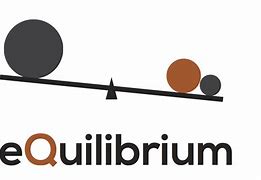
In societies where, different groups have control of the policy making process, what will be observed is that policies will change depending on the group in power. (Anyebe, 2018; Osman, 2002) However, this theory has been criticized for ignoring the power dynamics inherent in different groups. More financially buoyant groups will tend to have greater influence on the public policy process. The theory also ignores the role policymakers have in
deciding which policies should be pursued.
There are number of issues that affect how powerful groups and hence the level of influence they will have in the policy making space. Anyebe (2018) identifies some of these factors such as;
This theory when applied to a plural country like Nigeria can provide a foundation to understanding how public policies are developed and how the various actors and factors intersect to reach a compromise or state of equilibrium. This will be further examined when we discuss the stakeholders and actors in the policy making process. It has also been argued that public policy is also affected by self-interest.
The rational choice concept states that if we agree that elected officials/policymakers shape policies then it can be argued that such policies will be shaped to fit their self-interest instead of a national interest. It is thus argued that policymakers, in this case politicians will develop policies that will not hurt them politically. This kind of policy development will negatively affect policy outcomes and this will be examined later in the course.

C. INCREMENTALISM THEORY
This theory was developed by Charles Lindblom in 1959. The argument is that due to a number of competing interests, developing acceptable new public policies might be bogged down in competition (Obi, 2016). Because of
this most policy makers will focus on making slight variations on existing policies. So, public policy will just be ‘a continuation of past government activities with only incremental modifications’ (Anyebe, 2018). Sutton (1999) notes that this theory is remedial, focusing on making small rather than major changes and is rather conservative (Cochran and Malone, 2014) because it does not create new policies, rather it uses existing policies as a base for new policies.

However, the proponents of this theory argue that it allows for quicker development of public policy, because it reduces contestation between different groups.
7. The Main Areas of Public Policy
We have discussed the nature and meaning of public policy, the. types and the concepts that have tried understanding how policies are developed. Here we look at the various types of public policy areas. These include but are not restricted to the following areas and as new concerns emerge, new policies are developed to form part
of a country’s public policy.
The various policies could include;
a. Child and Family Policy
b. Cultural Policy
c. Economic Policy and Public Finance
d. Education Policy
e. Energy, Environmental, and Science Policy
f. Global Conflict
g. Health Policy
h. Poverty Eradication Policy
i. Food security Policy
j. International Development k. Social Policy and Inequality
l. Urban Policy

One new area of global concern has been the low level of development around the countries of the global south where high poverty levels and high rates of infant and maternal mortality remains a challenge. There are also issues of climate change and girl child education all resulted in the development of the Sustainable Development Goals. These resulted in countries developing new policies to address the issues highlighted in the SDG document if they did not have specific policies already in place.
8. Conclusion.
This unit has introduced students to the concept of Public Policy. It has examined the nature, features and types of public policies. The unit has also introduced the various theories that have emerged trying to explain and understand the concept of public policy. The unit is a foundation to understanding the relationship between Public Policy and Governance.
Governance is basically the way in which nation states are run and there is an obvious link between governance and public policy development and implementation. The types of public policies that emerge are tied to politics and
political action. As new governance has emerged, the manner in which policies are implemented has also evolved. It is argued that governments are now trying to balance efficiency over ethics.
The next unit will focus on the explaining the concept of governance before we proceed to and connect and examine the relationship of public policy and governance especially in the context of developing countries.
| 9. Tutor Marked Assignment
1. What do you understand by Public Policy and why is it important? 2. Examine one of the main theories of Public Policy and its relevance in explaining public policy development.
3. Identify one global event since the turn of the century that has affected the way public policy has changed. 4. As a global public policy, what effect did the Millennium Development Goals (MDGs) have in solving some of the worlds’ problems? 5. Taking one area of Public Policy, examine its success or challenges in Kenya.
|
| References
Anyebe. A.A. (2018). An Overview of Approaches to the Study of Public Policy. 2018. International Journal of Political Science (IJPS) Volume 4, Issue 1. PP 8-17 Attai, A.M, Ogbole, O. and Ojonemi, P.S. (2012). Public Policies/Programmes and National Development in Nigeria. Journal of Management and Corporate Governance. Volume 4 Cochran, C.L. and Malone, E.F. (2014). Public Policy: Perspectives and Choices. Fifth Edition Cochran, C.L. etal (2009). American Public Policy: An Introduction. Ninth Edition Carnegie Learning Dlakwa, H. (2008). Concepts and Models in Public Policy Formulation and Analysis Dye. T.R and Zeigler. L.H. (1975) An Uncommon Introduction to American politics. Duxbury Press Oni, E.O. (2016). Public Policy Analysis. University of KwaZulu-Natal Pietermaritzburg South Africa Orizu, I.N, Chinyere, O. M. and Tochukwu. E. K. (2012). Public Policy Formulation and Implementation in Nigeria: Questions, Challenges and Prospects Osman, F.A. (2002). Public Policy Making: Theories and their implications in Developing. Countries. University of Dhaka Sutton, R. (1999). The Policy Process: An Overview. Working Paper 118. Overseas Development Institute. |

Not a member yet? Register now
Are you a member? Login now