
BASIC PROTOCOL AND ETIQUETTE
Protocol and etiquette are resources for proper conduct in unfamiliar settings, toolkits to leave a lasting good first impression, avoid giving offence, and a hallmark of sophistication.
Familiarity with basic protocol and etiquette can be a source of great comfort at important social and professional occasions, like your best friend’s wedding or your first job interview. It can make your life easier and even get you hired. So below are some basics.
JACKETS: Modern two- or three-button jackets are cut in a way that the fabric doesn’t drape properly when the bottom button is fastened.
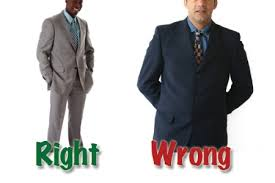
Three-button jacket: For a three-button jacket the rule is sometimes, always, never: sometimes fasten the top button, always fasten the middle button, never button the third.

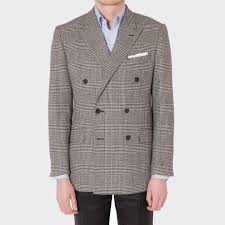
Double-breasted jacket: On a double-breasted jacket, button every button or do your own thing if you’re radically fashionable, just don’t quote me on it. Knowing which button to button shows that you pay attention to detail and that you wear a suit regularly, even if that’s really not the case.
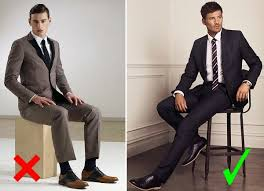
Unbutton jacket: Make sure you unbutton your jacket when you sit so it doesn’t crease and your buttons don’t pop. I wouldn’t know, but sitting in a buttoned jacket looks awfully uncomfortable.
Dress Codes
Here’s a pointer of what is de rigueur (French word meaning of what is required by etiquette or current fashion) when it comes to proper attire, particularly in business, where modesty is the best policy.

After five o’clock, or once artificial lighting is needed, men should not be seen in brown suits. Only grey, black and navy are appropriate for the evening.

Black Tie
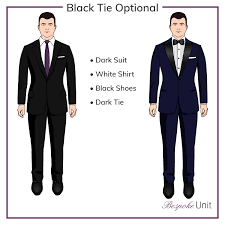
You’ve received an invitation to an official function or a wedding and the attire says, ‘black tie’. Black tie is second only to white tie and is worn exclusively for evening affairs that begin after six.
Black tie is a dress code for social functions that start after 6 PM. It means that the party is fancy and you should dress accordingly. Traditionally, when an event was black tie formal, it meant that the men should wear tuxedos only. Nowadays, Black tie is considered semi formal and is worn for dinner parties, balls and weddings. However, Etiquette experts discourage wearing black tie weddings.
Ladies:
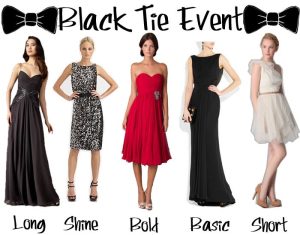
For black tie functions, women can wear either a formal long evening dress or a short cocktail dress and both may be sleeveless. A high-quality little black dress is a good staple to have in your closet for such occasions. Above-elbow gloves are optional with a sleeveless gown, but consider yourself warned: they tend to seem a tad old-fashioned. If you want to stand out, very dressy long pants are also allowed.
Gentlemen
You’ll need a black dinner jacket with satin or silk facings on the jacket’s lapels and buttons. The jacket pocket should be adorned by a white linen pocket square and you can choose to wear a boutonniere — a single flower in the buttonhole on the lapel.
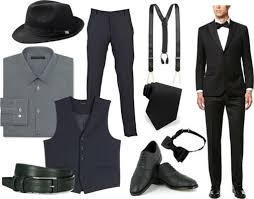
The trousers should continue the leitmotif (a recurrent theme associated with a particular person, idea, or situation) with a single stripe of satin covering the out seams. They should be uncuffed and worn with braces. You’ll also need a black waistcoat or cummerbund as well as a tuxedo shirt with French cuffs — the cuffs that require cuff links — and a turndown or winged standing collar.
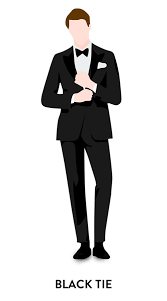
Black tie
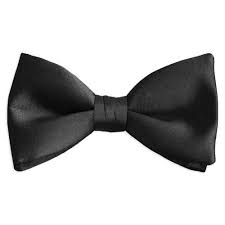
Don’t take ‘black tie’ too literary; what you’ll need as the cherry on top is a black silk bow tie — not a regular neck tie — and none of that clip-on nonsense.
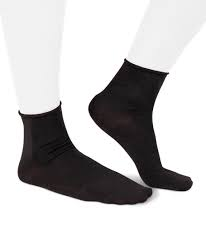
Men’s fashion: never wear short socks that would reveal any skin when sitting. This is all the more important for all formal attires, so make sure to stock up on black silk dress socks that cover the entire length of your calf.
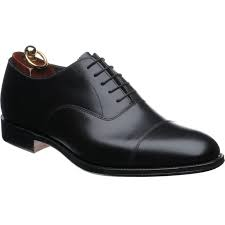
Shoes, black patent leather pumps or oxfords are the way to go, but make sure the soles aren’t too thick or in a contrasting color.
INTRODUCTIONS IN PROTOCOL
In this section, one should be able to introduce themselves properly and introduce others in a manner that respects protocol and etiquette.
When making introductions, honor is recognized by the name spoken first, meaning that the higher-ranking person’s name should be mentioned first.
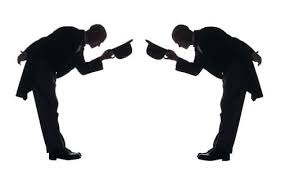
Men are introduced to women and a younger person is introduced to an older person.
Napkin
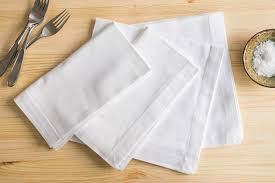
The dinner napkin should be taken from the table and placed on your lap when you sit down. Dinner napkins are larger in size compared to luncheon napkins and should be placed on the lap by unfolding them halfway with the fold facing your body.

Luncheon size napkins are smaller and are unfolded completely. Wait for the host to open their napkin before opening yours. Do not do so it by shaking it but rather discreetly under the table.
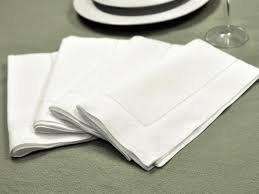
When the meal is over, the napkin should be casually folded and placed on the left side of the plate, or, if the plate has already been removed, in front of you. Leave your napkin on the chair lightly folded when you leave the table during a meal. Do not place it on the saucer under a cup.

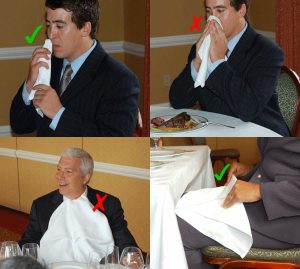
When you want to take a sip from your glass, make sure you dab your mouth with your napkin to avoid staining the rim of the glass. Always dab your mouth with a napkin, never wipe. Never tuck the napkin into the collar or between the buttons and don’t use your napkin as a handkerchief.
While we’re at the subject of fine dining, all items not having to do with food and decoration should remain off the table. That includes keys, clutch bags, sunglasses, and especially phones.
From the Outside In
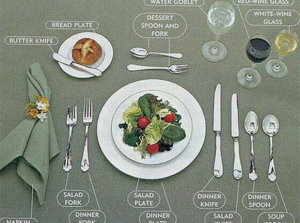
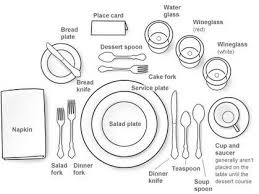
There should never be any question of which silver to use: You always start with the implement of each type that is farthest from the plate.
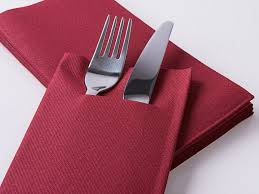
Silver
Work your way in and assume that the table is correctly set. As for the dessert silver, start at the top. When you have finished the main course, the knife and fork are placed in parallel on the plate diagonally from upper left to lower right with the handles extending slightly over the edge of the plate.
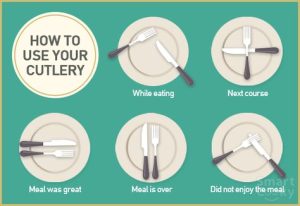
Fork and knife
Never place the fork and knife on the plate with the handles touching the table. Once you pick up the utensils they should not touch the table again.
Knife and Fork
There are two different styles of using a knife and a fork: the American and the European style. The first implies changing the fork from left to right hand after using the knife to cut food and, although uncommon in Europe, is perfectly correct, but perhaps unnecessarily complicated. The European method of leaving the fork in your left hand after using the knife with your right hand is much simpler.
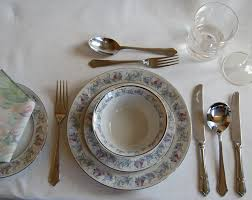
One of the most common, but less known, faux pas (an embarrassing or tactless act or remark in a social situation): never place the fork and knife on the plate with the handles touching the table. Once you pick up the utensils they should not touch the table again.
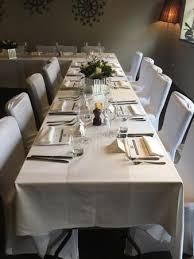
Dining Dont’s
Don’t encircle your plate with the left arm while eating with the right hand. Don’t push back your plate when finished. Don’t drink if your mouth is already filled with food. It’s an affected mannerism.
Netiquette
Avoid indulging in arguments on social networks and keep personal conversations private. Keep in mind how easily e-gossip can be forwarded along to the wrong person. Posting photos of your friend’s babies or children on your social media accounts without their knowledge and permit can be a major breach of trust.
Work Etiquette
Example: when leaving a room in a business office, always step back to allow your superior to go first if they are about to leave too. This one is important because it seems counter-intuitive at first glance: when getting into a taxi with a superior, go first so she doesn’t have to scooch across the seat. When entering the elevator, also go first. This is to allow the senior person to exit first.
Not a member yet? Register now
Are you a member? Login now